Palestinian women protest in Gaza city during First Intifada

Review:  “The Palestinian Left and its Decline” by Francesco Saverio Leopardi published in 2020.

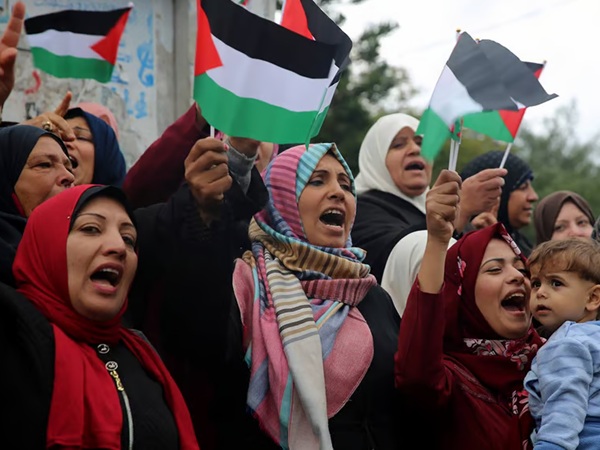
In 1969 the PFLP declared it was a “Marxist-Leninist” organisation – a term universally used by Maoist organisations. Lenin’s united workers front strategy was replaced by Mao’s popular frontism; his class-based approach to the national question was overturned by prioritising the national conflict over class struggle;  his international workers’ solidarity was replaced by alliances with the ruling elites of ‘friendly countries’; and Lenin’s “arming the working class” during a working-class led political revolution was replaced by “guerrilla struggle” aimed at igniting a mass based popular war.

Read More »
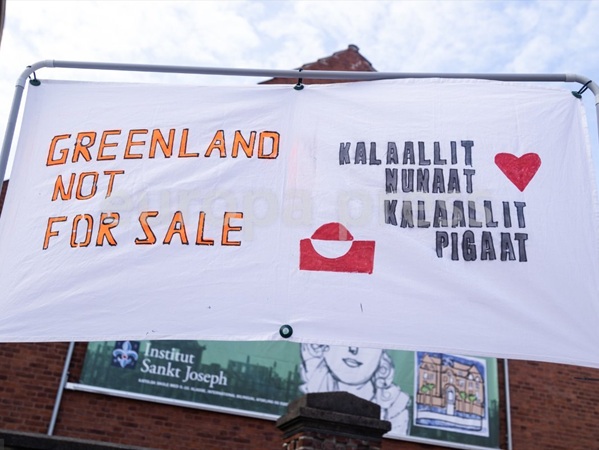
Big banner saying "Greenland not for sale" in 2 languages

“Kalaallit Nunaat, Kalaallit pigaat” – Greenland belongs to the Greenlanders 

Thus, if we, as a movement, are serious about anti-imperialism, anti-capitalism and socialist feminism, we need to centre Indigenous voices and support the Kalaallit in how they decide to organise their own movement toward decolonisation. We have to stop speaking about this as a geopolitical conflict between Denmark and the US and start speaking about it as a continuation of the long history of annexation of Indigenous land by Western superpowers

Read More »
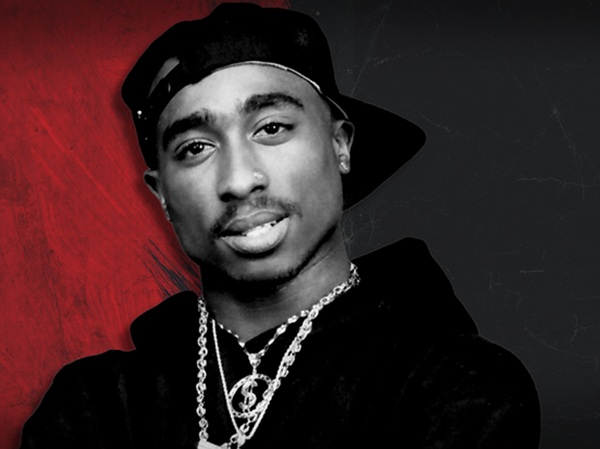
Tupac Shakur

Review: Words for My Comrades: A Political History of Tupac Shakur by Dean Van Nguyen

Most portrayals of Tupac in the mainstream media superficially depict him as a reckless, antisocial tearaway, but anyone with more than a superficial familiarity with his music will know that his outlook was steeped in social awareness and political analysis. And how could it have been any other way, given that Afeni raised him in such a political environment? His godfather was Geronimo Pratt, a leader of the Black Panthers, while his godmother was Assata Shakur of the Black Liberation Army.

Read More »
Graffiti of Chavez with text Chavez Vive

The fate of half-revolutions – lessons of Chavismo

Notwithstanding nationalisations of oil, telecommunications, electricity and public services, the main levers of the economy still remained in the hands of the capitalists. In addition, a new layer of state bureaucrats and managers – the so-called Bolibourgeoisie – enriched themselves in this period and acted as a brake on the revolutionary process.

Read More »
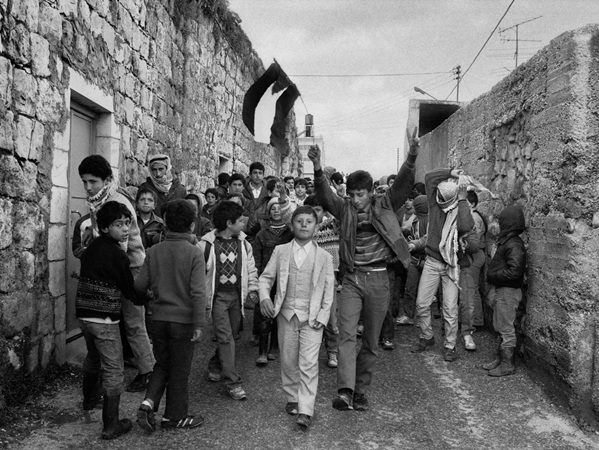
School students in Gaza on demonstration - February 1988

9 December 1987: Start of the first Intifada

Working-class protesters raided the crops of wealthy Palestinian landlords, forcing them to reduce rents. They went on strike and refused to pay taxes. Israeli Civil Administration bodies in the occupied territories were boycotted and Palestinians refused to work in Israeli settlements. A grassroots movement spearheaded by women and girls sought to establish Palestinian food autonomy, and began collectively cultivating crops.

Read More »
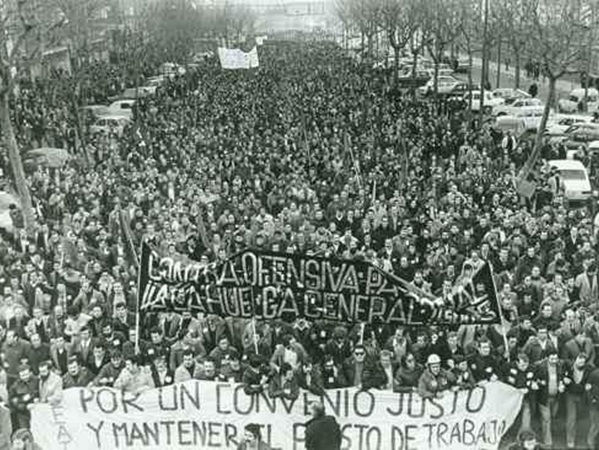
Mass demonstration by SEAT workers in Barcelona against Franco dictatorship in 1971

50 years ago Francesco Franco, Spain’s fascist dictator died

According to the Socialists and Stalinists, i.e., the Mensheviks of the first and second instances, the Spanish revolution was called upon to solve only its “democratic” tasks, for which a united front with the “democratic” bourgeoisie was indispensable. From this point of view, any and all attempts of the proletariat to go beyond the limits of bourgeois democracy are not only premature but also fatal.

Read More »
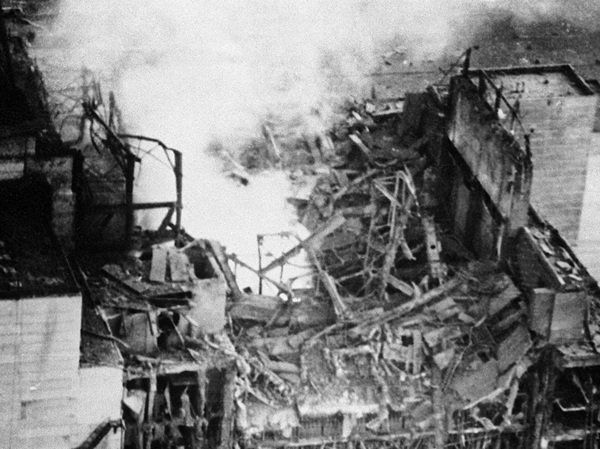
The early aftermath and wreckage at the Chernobyl nuclear station

Chernobyl disaster: interviews with victims

Although scientists estimate that 200,000 have died following the Chernobyl disaster, big business and governments are attempting to resurrect nuclear power, arguing the consequences of the disaster were not so serious after all.

Read More »
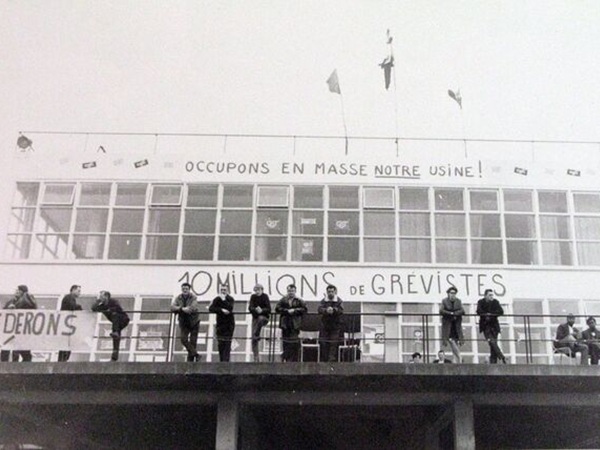
Workers outside the occupied Renault plant in France 1968

Adapting to a new era: the post-WWII Fourth international

For Marxists, any outlook is conditional. Many economic, political and social factors arise and interact with each other. At any given time, it is crucial to evaluate and adapt the perspectives that have been mapped out, because it is these that provide the guide for revolutionary action. A fundamentally different development from the one anticipated can occur, and clinging to dated perspectives is a mistake for which there is always a heavy price to pay. Unfortunately, this is what happened with the Fourth International.

Read More »
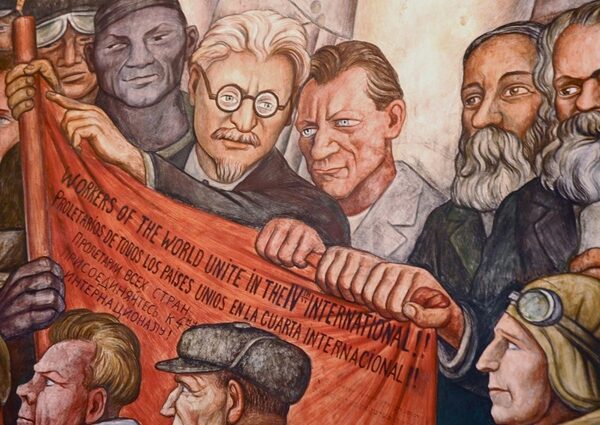
Montage by Diego Rivera to commemorate founding of Fourth International

How the Fourth International fought World War Two

As the anniversary of the end of World War Two is celebrated, the world’s leaders are again recruiting soldiers and arming them with horrific new weapons in preparation for new conflicts, and possibly yet another, even more brutal world war.
This article examines how Trotskyists worldwide struggled, ‘despite all hazards’, to build the slender forces of the Fourth International (FI), intended to assist the working class to overthrow capitalism, and the bureaucratic, Stalinist elite in the USSR and replace them by genuinely democratic, international socialism to end poverty and war forever.

Read More »