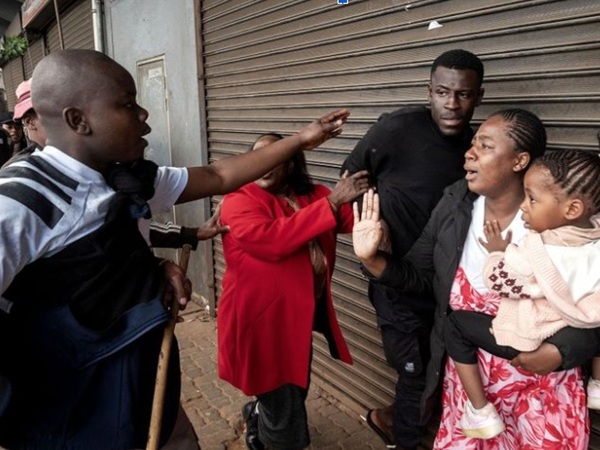
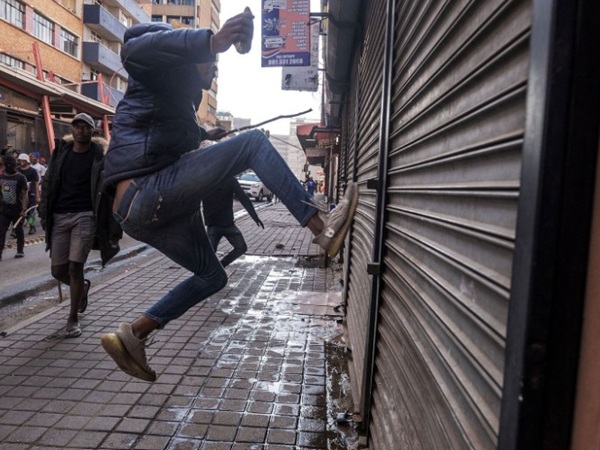
30 June 2026 marked the culmination of accelerating anti-immigrant tensions in South Africa. For 6 years, political parties like MK, ActionSA, and Patriotic Alliance have championed xenophobia alongside groups such as PutSAFirst, Operation Dudula, and March and March. The rhetoric has been escalating, in the last year, with these groups going so far as encouraging followers towards unlawful vigilantism like denying access to medical facilities and schools, conducting checks of people’s identification information, and physically blocking entry to anyone deemed unworthy.
These movements are driven by widespread hopelessness around rising unemployment, inequality, and poverty in South Africa, where 67% of the population is living in poverty despite the repeated promises that the ANC will deliver “a better life for all”. Additionally, the politicians have proven that they cannot and will not try to address the service delivery crisis gripping most working-class communities.
Despite the claims from the government that loadshedding (rolling blackouts) is a thing of the past, most people are still forced to live without electricity on a regular basis for hours, or even days at a time. Couple that with a growing water crisis, where some neighbourhoods were cut off from water for weeks on end and residents had to protest to get action from municipalities, and you can see why discontent is mounting.
Working-class anger
Working-class people are legitimately furious, and opportunistic groups have been building on that anger to paint immigrants as the cause for all their problems, using false narratives without solutions.
On the other side of the spectrum, elites and their political puppets prefer to scapegoat vulnerable Africans, because by doing so, they are able to divert attention from the fact that they are causing this crisis through theft and incompetence. They are bleeding the state’s coffers dry instead of investing in infrastructure and services that will actually ensure a better life for all who live in South Africa.
The GNU (Government of National Unity) which came to power after the last elections is a fractured mess that doesn’t have a programme to raise the living standards of the working-class. Instead, it focuses on internal squabbles and power plays while seemingly growing more detached from the challenges that the majority faces on a day to day basis. This causes a perfect storm of self-interested maneuvering where small shifts in support can make huge political differences, especially in an election year, like 2026.
Migrants being scapegoated
Politicians are looking for easy wins and ways to distract from their failures and migrants provide a perfect scapegoat because they cannot vote or resist the large populations mobilised against them. As seen in recent elections in the UK and other countries, parties that target foreigners can win votes while deflecting blame from the ills caused by their capitalist policies. Marginalising migrants is a fundamentally short-term strategy that doesn’t address any actual causes, ensuring that the problems will continue growing.
In 2008, more than 60 people lost their lives because of xenophobic fueled violence in South Africa. In 2025, countless people were denied access to medical facilities including pregnant women by groups linked to March and March that unlawfully demanded access to people’s personal documentation. Bearing in mind that at least 4 million South African people above the age of 16 do not have Identity Documents, such a move inevitably also affected poor South African working-class people, showing that March and March does not exist to serve the interests of the working-class in general.
During the demonstrations held by March and March in early 2026, numerous people were assaulted including South Africans who “looked different” or “did not have the right accent”. Since the declaration from right wing groups that all migrants should leave South Africa before 30 June 2026, thousands of Africans have either fled the country or have been desperately trying to leave. As a result, thousands of people have been forced to seek shelter wherever they can, most without access to water or food, while waiting for often unsafe buses to take them to other countries. More than a dozen babies were born on pavements and on buses over the last 3 months as their mothers were too afraid to go back to their houses or to approach medical facilities.
Meanwhile, politicians are trivialising, shifting the blame on to the migrants and their home countries’ governments. However, it is clear that migrants are not responsible for the broken immigration system, or for the collapse in the economy. It was not the migrants who adopted the neoliberal GEAR (Growth, Employment, and Redistribution) policy which plunged South Africa down the drain of austerity! Migrants didn’t loot the state and create criminal, dysfunctional government institutions.
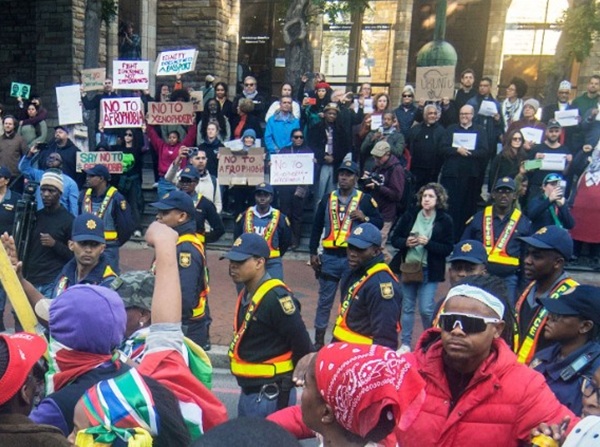
The working-class in South Africa is diverse. On 30 June 2026, the ruling class successfully turned workers against one another. Thousands of foreign workers have already left the country, so the question is which group will be targeted next? The working-class must unite and boldly say:
- No to xenophobia
- Yes to workers’ unity
- Down with the ruling class
- For a workers’ government and democratically controlled socialist economy to ensure jobs, homes, services and a secure life for all.